
 We have all suffered under the guilt, power, and condemnation of sin. We all know what a cruel taskmaster sin can be. We all have experienced the misery, heartache, and suffering that sin can cause us – how it destroys our relationships, our life, our souls. But there is good news!
“There is therefore now no condemnation to those who are in Christ Jesus, who do not walk according to the flesh, but according to the Spirit” (Romans 8:1). The word “therefore” indicates that Romans 8 is a pivotal chapter. What Paul writes here is based on all that he wrote before in the book of Romans: The condemnation of the whole world (1-3), the blessing of salvation for all through faith in Jesus Christ (4-5), the moment we died to sin to live for God (6). In the more immediate context, Chapter 7, Paul describes his life before becoming a Christian. Sin ruled his life. He was spiritually dead, separated from God by sin. At the end of the chapter, he cries out in desperation to be delivered and thanks God for the only One who can deliver him – Jesus Christ, our Lord (vv. 24-25). Therefore, now there is no condemnation in Christ! What a beautiful, wonderful, inspiring, encouraging thought – no condemnation! Every sinner wants to hear those words. Imagine yourself before a judge having been convicted on many counts of violating the law, having served for years in the penitentiary on death row, but on this day the judge pronounces you, “Not guilty!” That means that you are pardoned, forgiven of all your crimes, no longer under the sentence of death, free to enter back into society to live your life. Well now that is a physical picture of the spiritual things Paul is writing about here – we are pronounced “Not guilty!” by God, forgiven of all our sins, no longer separated from God, free from the rule of sin to live a new life of righteousness. We no longer walk after the flesh, but after the Spirit. That’s what we have in Christ!
0 Comments
 Galatians 5:6 “For in Christ Jesus neither circumcision nor uncircumcision avails anything, but faith working through love.”
There is faith. There is faith working. There is faith working through love. Only the latter can save our souls. Faith is necessary for our salvation. If we do not believe we cannot be saved (John 8:4). If we truly believe we will trust (2 Corinthians 1:9-10; 3:4; 1 Timothy 4:10; 6:17; Hebrews 2:14) and obey (Acts 5:29, 32; Romans 2:8; 6:16-17; 10:16; Galatians 3:1; Philippians 2:12; 2 Thessalonians 1:8; Hebrews 5:9; 11:6, 8; 1 Peter 4:17). Faith working is necessary for our salvation. Faith without works cannot save; it is unprofitable (James 2:14-16). Faith by itself is dead (v. 17). Faith is made perfect by works (v. 22). We are justified by works, not by faith alone (v. 24). It is not our own works that save us (Ephesians 2:8-10; Titus 3:3-8) but the work of faith (1 Thessalonians 1:3; 2 Thessalonians 1:11), the obedience of faith (Romans 1:5; 16:26). Faith working through love is necessary for salvation. We cannot be saved unless we receive the love of the truth (2 Thessalonians 2:10). Salvation is for those who love the Lord (1 Corinthians 2:9; 16:22; James 1:12; 2:5) and the brethren (1 John 3:10, 14). Anyone who does not love does not know God (1 John 4:7-8). If anyone does not love the Lord, he will be accursed (1 Corinthians 16:22). If we leave our love for the Lord, we will lose our place with Him (Revelation 2:4-5). What kind of faith do you have? 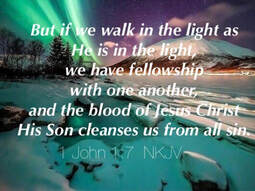 Some feel sure that they are. Some aren’t too sure. But how can we know? John helps us to answer this question (1 John 1:5-9).
John first reminds us of the holiness of God. “God is light and in Him is no darkness at all” (v. 5). Light is a symbol of absolute sinlessness, truth and life (cf. John 1:1-9; 3:19-21; 8:12; 9:5; 12:35-36). God is separate from all evil, every falsehood and death. He is holy (cf. Psalms 99:3, 5; Hosea 11:9, 12).  Many churches call themselves a Bible Church. They claim to adhere to the Bible, but they are not the church you read about in the Bible.
Most of them are accepting of denominational churches, largely made up of persons received from denominational churches and hold to the same doctrines as denominational churches yet refer to themselves as nondenominational (not affiliated with any denomination) when in fact they are interdenominational (drawing from many different denominations). The church of the Bible was undenominational (opposed to denominationalism). Christ built only one church and He did not want it to be divided into many different kinds of churches built by men (Matthew 16:18; John 17:20-23; 1 Corinthians 1:10-13; Ephesians 1:22-23; 4:4; 5:23).  “Just believe. Ask Jesus into your heart. Say the sinner’s prayer. You will be saved, and it is impossible to lose your salvation.”
Those words are popular, but are they true? If we just believe for salvation, why are we told to then ask and pray? What is it, just believe or ask and pray? Where does the Bible say to “just believe” for salvation? It certainly teaches us to believe, but where does it say to just believe? Doesn’t the Bible teach us that it is only a convicted, trusting, obedient, working faith that saves? Doesn’t the Bible teach us to repent of our sins for salvation? Doesn’t the Bible teach us to confess our faith in Jesus as the Christ, the Son of God, for salvation? Doesn’t the Bible teach us to be baptized for salvation?  Yes, that’s exactly what we read in 1 Peter 3:21.
But, doesn’t the Bible teach that Jesus saves us? Of course! He is the only Savior (Acts 4:12). Without Him we cannot come to the Father (John 14:6). We could never pay for our sins, but His blood paid for our sins (1 Peter 1:18-19). So, what does baptism have to do with it?  A teacher asked the children in her Sunday School class, “If I sold my house and my car, had a big garage sale and gave all my money to the church, would I get into heaven?”
“NO!” the children all answered. “If I cleaned the church every day, mowed the yard, and kept everything neat and tidy, would I get into heaven?” Again, the answer was “NO!” “Well,” she continued, “then how can I get to heaven?” In the back of the room, a five-year-old boy shouted out, “You gotta be dead!”  Most all of us have insurance of one kind or another, such as home, health or life insurance. We see the need to protect ourselves from losing our home, are concerned about not being able to pay for health care and being able to leave something for those left behind when we die.
These are certainly important concerns for us all to consider but have you thought about insurance for your soul? What is going to happen to your soul when you die? Will you spend eternity in heaven or in hell? Can you know whether you are saved or not? |

AuthorRobert Dodson is the Preaching Minister for the Northwest Church of Christ. Archives
January 2023
Categories
All
|
 RSS Feed